Posted in All About Self Control, Just Talkin'

Summer Fun: Games That Build Self-Control

Summer is officially here, and with it comes longer days, warmer weather, and plenty of opportunities for fun! While it’s great to let kids run wild and burn off energy, remember that summer is also a fantastic time to subtly teach important life skills. One of the most valuable lessons you can impart is self-control.

Self-control isn’t just about good behavior; it’s a foundational skill that helps kids succeed in school, navigate social situations, and thrive in various environments. Think about it: sitting still in a classroom, waiting patiently at a restaurant, or being quiet during a church service all require a good dose of self-control.

The good news? You don’t need a textbook or a lecture to teach this! Many classic games are perfect for helping kids practice sitting still, being quiet, and managing their impulses. These aren’t just fun ways to pass the time; they’re powerful tools for developing crucial self-regulation skills.

Here are a few ideas for games that encourage stillness and quiet, perfect for those moments when you need a little calm amidst the summer excitement:

Hide-and-Seek

This timeless favorite is brilliant for fostering self-control. While one person counts, the hiders must find a spot and then remain absolutely still and silent, no matter how tempting it is to giggle or move. The thrill of not being found reinforces the importance of quiet and stillness.

Freeze Dance

Turn on some music and let your kids dance their hearts out. But when the music stops, they have to freeze in whatever position they’re in! This game challenges them to stop their bodies instantly and hold still until the music starts again. It’s a fantastic way to practice quick transitions and physical restraint.

Statues (or Red Light, Green Light)

Similar to freeze dance, the “Statues” game involves striking a pose and holding it perfectly still. You can call out different statue themes (e.g., “animal statues,” “sports statues”) to add to the fun. “Red Light, Green Light” is another variation where kids run on “green light” and must freeze immediately on “red light.” These games are excellent for practicing impulse control and physical stillness.

Incorporating these types of games into your summer routine provides a playful yet effective way to build essential self-control. Not only will you be creating lasting memories, but you’ll also be equipping your children with skills that will benefit them for years to come. So, this summer, embrace the quiet moments and play your way to better self-control!

Posted in All About Self Control, Positive Flow

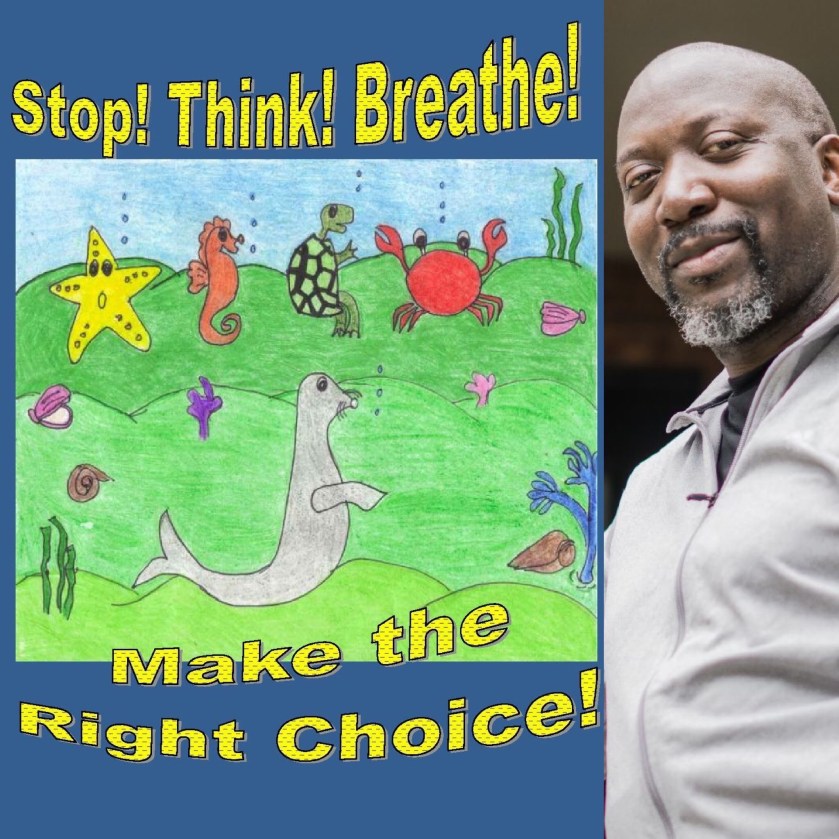
Stop, Think, and Breathe then Make the Right Choice!

In our fast-paced world, where the next big thing is just a click away, decision-making can feel like a race against the clock. But have you ever found yourself regretting a choice you rushed into? Let’s take a fun and informative journey into the importance of pausing to think before making decisions that could lead to regret.

The Need for a Pause

When faced with a decision—whether it’s choosing a new job, an impulse purchase, or even a late-night snack—our instincts often scream for immediate action. However, research shows that a little pause can go a long way. It gives you a chance to evaluate your options, weigh the pros and cons, and avoid the dreaded buyers’ remorse.

Imagine standing in a store, eyeing a cutting-edge gadget. The excitement is palpable, but instead of carting it off immediately, take a deep breath. Ask yourself, “Do I really need this?” A simple pause can turn a potential mistake into a well-thought-out purchase.

Breathing Room for Clarity

In moments of high pressure, our brains can get flooded with adrenaline, clouding our judgment. By intentionally creating a buffer—whether it’s stepping outside, getting a glass of water, or even just counting to ten—you allow your mind to clear. This breathing room can lead to clarity, helping you see the situation from different angles.

Consider this: When planning a big life change, such as moving to a new city, it can feel overwhelming. Taking the time to research neighborhoods, cost of living, and job opportunities can reveal details you may have overlooked in your initial excitement.

The Power of Pros and Cons

One method to enhance your decision-making process is by creating a pros and cons list. The simple act of writing down your thoughts can provide surprising insights and highlight the hidden consequences of your decisions. It’s like giving your brain a workout—getting all the tangled thoughts out on paper can lead to breakthroughs you didn’t see before.

Remember, each line you add to that list could be a crossroads in your future!

When in Doubt, Consult

Sometimes, two (or more) heads are better than one. If you’re struggling, don’t hesitate to consult with a friend, mentor, or colleague. They may have faced similar decisions, and their experiences can provide invaluable insights. Plus, talking it out can help you articulate your thoughts more clearly.

However, select your advisers wisely: choose people who give constructive feedback rather than those who simply confirm your biases.

Trust Your Gut… After the Pause

Ultimately, your intuition can serve as a powerful compass—once you’ve given yourself some time to reflect. After considering all factors and consulting with trusted friends, listen to your gut. If something feels off, don’t ignore that feeling. But if all signs point to “go,” then seize the opportunity with confidence!

Wrap-Up

In conclusion, taking a pause before making big decisions might just save you from unnecessary regret. Embrace the art of deliberation—give yourself the time to think, weigh your options, and seek input from others. After all, the best decisions are often those made with clarity and patience.

Next time you’re faced with a decision, remember: a little patience can go a long way in steering you away from the paths you might regret!

Stay thoughtful and have fun making decisions! For more tips and insights, feel free to reach out at [item] or visit [item]. Happy choosing!

Posted in All About Self Control

Consistency is Key: Nurturing Self-Control in Your Preschooler

Self-control is a cornerstone of success in all areas of life. It’s the ability to manage emotions, resist temptations, and persevere towards goals. While it may seem daunting to instill this vital skill in your energetic preschooler, the good news is that you have a powerful tool at your disposal: consistency.

Why Consistency Matters

Think of your child’s brain as a developing garden. Just as a gardener needs to consistently water and weed to cultivate healthy plants, you need to provide consistent boundaries and expectations for your child’s behavior.

  • Predictability Fosters Security: Consistent routines and expectations create a sense of predictability and security for young children. This predictability helps them understand what is expected of them, reducing anxiety and making it easier for them to cooperate.
  • Teaches Cause and Effect: When consequences for certain behaviors are consistently applied, children begin to understand the link between their actions and the outcomes. This helps them learn to make choices that lead to positive results.
  • Builds Trust: Consistent discipline, delivered with love and understanding, builds trust between parent and child. Children learn that their parents are reliable and will follow through on their words.

Tips for Maintaining Consistency

  • Establish Clear Rules: Clearly define and communicate your expectations for behavior. Keep the rules simple and age-appropriate.
  • Create Routines: Consistent routines provide a predictable structure for your child’s day, reducing anxiety and making it easier for them to cooperate.
  • Follow Through: It’s crucial to consistently follow through with the consequences of your child’s behavior. This doesn’t mean being harsh, but it does mean being firm and fair.
  • Be Patient and Persistent: Building self-control takes time and effort. There will be setbacks along the way. Stay patient and persistent in your approach.

Research Supports the Power of Consistency

Research consistently shows that consistent parenting practices are linked to better outcomes for children. For example, a study published in the Journal of Child Psychology and Psychiatry found that children of parents who were consistent in their discipline were more likely to develop strong self-control skills and better social-emotional functioning (Kochanska, G., & Murray, K. T. (2000). Effortful control in early childhood: Origins of individual differences. Child Development, 71(1), 109-127).

Remember: Consistency doesn’t mean being rigid or inflexible. It means providing a predictable and supportive environment where children can learn and grow. By consistently setting clear expectations, providing loving guidance, and celebrating their successes, you can help your child develop the essential life skill of self-control.

Disclaimer: This blog post is for informational purposes only and should not be considered professional medical or psychological advice.

I hope this blog post helps! Let me know if you have any other questions.

Posted in All About Self Control, Positive Flow

Teaching Kids to Make the Right Choices: A Fun Adventure!

Hey there, wonderful parents and guardians!

Have you ever stopped to think about how much we can learn from our kids? They’re little, but wow, do they have an immense capacity for choosing joy, laughter, and all things fun! When it comes to teaching them about making the right choices, it’s not just them who’ll get inspired; you might just find yourself inspired to make some right choices too!

Imagine this: your little one is faced with a decision—do they share their snacks or keep them all to themselves? As you guide them through that decision, you take a moment to reflect. What choice would bring more happiness? Sharing those cookies might lead to giggles, smiles, and a fantastic memory. And guess what? Watching that exchange of joy can stir something in you too! You might realize that sometimes, it’s those small acts that lead to larger happiness.

You can’t teach what you don’t do, right? So, let’s dive into this together! Lead by example. Show them how you tackle choices—big and small. Whether it’s picking up litter on your street, celebrating a friend’s good news, or just trying out a new recipe, let your actions speak louder than words. When your kids see you making positive choices, they’ll be encouraged to do the same!

And here’s the fun part: turn this journey into a game! Make a family chart of choices, where each act of kindness, each decision made together, earns stickers or tokens. Create awesome rewards for reaching goals as a family. It’s all about turning lessons into exciting adventures!

So, what do you think? Are you ready to inspire your little ones (and maybe give yourself a little motivation boost too)? Let’s sprinkle some fun into the decision-making process and grow together!

Cheers to joyful choices and playful learning!

Warmly,
Mr. Demby

Posted in All About Self Control

Teach Your Children To Sit Still

Good Morning Most Awesome and Wonderful World Changers! While sitting in a restaurant last week, I saw a family having dinner. The adults were on one side and kids were on another. The kids were standing in the chairs, laughing loud, yelling, and just being plain annoying. I sat and said to myself; “ What disservice they’re doing to their kids”. I would really like to see parents practice how to behave in a public restaurant at home with their kids before they bring them out. This is the perfect time teach your kids how to sit still and talk quietly while you enjoy your meal. This helps by teaching kids not to act on impulse. It helps them to learn self control, which they will need for the rest of their lives. Let’s give our children a better start in life by giving them the simple tools needed for self-control.

Posted in All About Self Control

The Social Distancing Blues Washed Away thanks to Dr. Andrea Dinardo!

Hello Most Awesome and Wonderful World Changers! I haven’t posted in a while. Since there is no school, I’ve been stuck in the house. It started out very depressing but after a few days and some of my principal friends contacting me, I found some passion again. I started doing “ Music In Pajamas”

My Passion is ignited once again!

Daily Affirmations: Today is an Amazing Day. I feel good about myself. I love to feel the sun on my face. My passion is ignited. I love and approve of myself. I am healthy, wealthy, whole, and complete. ALL IS WELL IN MY CLASSROOM. ALL IS WELL IN MY SCHOOL. ALL IS WELL IN MY WORLD. ALL IS WELL AND I AM SAFE. #IBlessMyWorldWithLove

Posted in All About Self Control

Things to Do While We’re Out Of School

While our kids are out of school.

Let’s take the time to discuss behavior expectations and making right choices! This will help you!

Posted in All About Self Control

Release the Peeves 1.3

Good Morning Most Awesome and Wonderful World Changers! We’ve been talking about letting go of our “pet peeves”. Which really just something we use as a means to control others and an excuse to get angry. So this week we’re learning some steps to let them go. As teachers, we really have to work hard to release our peeves. But it makes the difference in classroom full of peace or a classroom full or anger. You choose. Anger begets more anger!

Step 3: Ignore The “pet peeve” behavior. What we give our attention to, is what comes to us on a continuous basis. Therefore it is a good choice to ignore the behavior that makes you the angriest. Through my 17+ years of teaching experience, I’ve noticed that once children realize they can get under your skin, they will seemingly do it more and more. So years ago when learned this trick, it did wonders in my classroom. “ Now I must say I’m still not all the way there. I can ignore about 70%, the other 30% . . . Get ready to meet the angry 😡 Mr. Demby”. The point is, I’m still working on it.

1. Stop focusing on the person doing the wrong thing. Don’t even acknowledge them or they’re behavior.

2. Think of ways to focus on the right behaviors. Don’t even say, “I like the way . . . Is sitting” or something like that. Just totally start talking to your students about the lesson or a current event.

3. Breathe as you will need it. Because as you ignore, the behavior will probably become more intense in order to get your attention. Turn on a video or have the children read a book, if you need to step away.

4. Make the right choice to stay the course. Don’t give in to the old angry you. Stay cool 😎, calm, and collected!

Try this relaxation video. https://youtu.be/m1q93OOdj5E

Daily Affirmations: Today is a Wonderful day! I am at peace. My happiness is bubbling over from within. I have so many reasons to rejoice. I love and approve of myself this very moment. I release all of my pet peeves. I am healthy, wealthy,whole, and complete. ALL IS WELL IN MY CLASSROOM. ALL IS WELL IN MY SCHOOL. ALL IS WELL IN MY WORLD. ALL IS WELL AND I AM SAFE. #IBlessMyWorldWithLove

Posted in All About Self Control

Release the Peeves 1.2

Good Morning Most Awesome and Wonderful World Changers! I’m going to continue talking about these “pet peeves” that rule our beliefs and behaviors. As a teacher, we have to learn to let it go. The classroom is the place for mistakes and learning. Through those mistakes we find teachable moments. That’s true teaching, when every experience turns into an opportunity to learn and grow! That’s the type of teacher I aspire to be.

Step 2: Stop yourself. When we are learning to release the peeves, you are going have internal battles. The old you will be begging to come out. “ Let me yell at them, they’ll get right!” While the new you is saying, “ Let’s give them room for mistakes and learning.” Personally, sometimes the old me wins out. In those times I have to stop myself before the situation escalates any further. Teachers many times it’s us that escalate the students not the other way around. You can almost see the life drain from the children when they are yelled at. So only you can stop yourself.

1. Stop in mid-sentence if you have to

2. Think of a way help the children understand that this is something you’re wrestling with

3. Breathe in and breathe out. Give yourself time to calm down. Put on a short video or story for the kids to watch, while you calm yourself

4. Make the right choice to use every moment as a teachable moment for you and the students. Don’t escalate a small mistake into a big blowup.

Everyone has to be able to Stop, Think, and Breathe and Make the Right Choice for themselves.

Daily Affirmations: Today is a Totally Terrific day. I choose to move forward with joy and ease. I live in a safe a secure world. It is safe to let the people around me make and learn from their mistakes. I release the need to control their lives. I love and approve of myself exactly as I am right now. I am healthy, wealthy, whole, and complete. ALL IS WELL IN MY CLASSROOM. ALL IS WELL IN MY SCHOOL. ALL IS WELL IN MY WORLD. ALL IS WELL AND I AM SAFE. #IBlessMyWorldWithLove

Posted in All About Self Control

Release the Peeves! Teach and Reteach. . .

Good Morning Most Awesome and Wonderful World Changers. I believe I’ve said this more than once, but as a teacher; you really can’t have “pet peeves”. That one thing that you just cannot tolerate will end up in your classroom every time. Most time it will show up in several students. It is a common fact that people in our lives are mirrors of ourselves. The people we like, exhibit the characteristics that we like about ourselves. The people we do not like, exhibit the characteristics that we do not like about ourselves. So this week we will focus on how to start releasing our pet peeves.

Step 1: Teach and Reteach When certain behaviors show up in your classroom, in order to not see it again; I stop whatever I’m doing and show the students what I expect. It’s best to do this when you’re not angry 😤. Doing this will save you from a great deal of days where you constantly focus on behavior.

1. Stop whatever you’re doing.

2. Think of ways to teach and Reteach the correct behaviors

3. Take a breath and don’t let the learner’s mistakes make you so angry that you can no longer teach.

4. Make the right choice by realizing that your pet peeve is totally your preference. Your way is not always the right way. You have no right to try and control others. Your job is to let them know of the others ways they can handle certain situations and be there to lead them as they choose.

Every person has to Stop, Think, and Breathe and Make the Right Choice for themselves.

Daily Affirmations: Today is an Awesome day. I choose to feel good about myself. I release the need to control others. I instead choose to love and approve of every part of myself. I am beautifully and wonderfully made. I am healthy, wealthy, whole, and complete. ALL IS WELL IN MY CLASSROOM. ALL IS WELL IN MY SCHOOL. ALL IS WELL IN MY WORLD. ALL IS WELL AND I AM SAFE. #IBlessMyWorldWithLove