Posted in Positive Flow

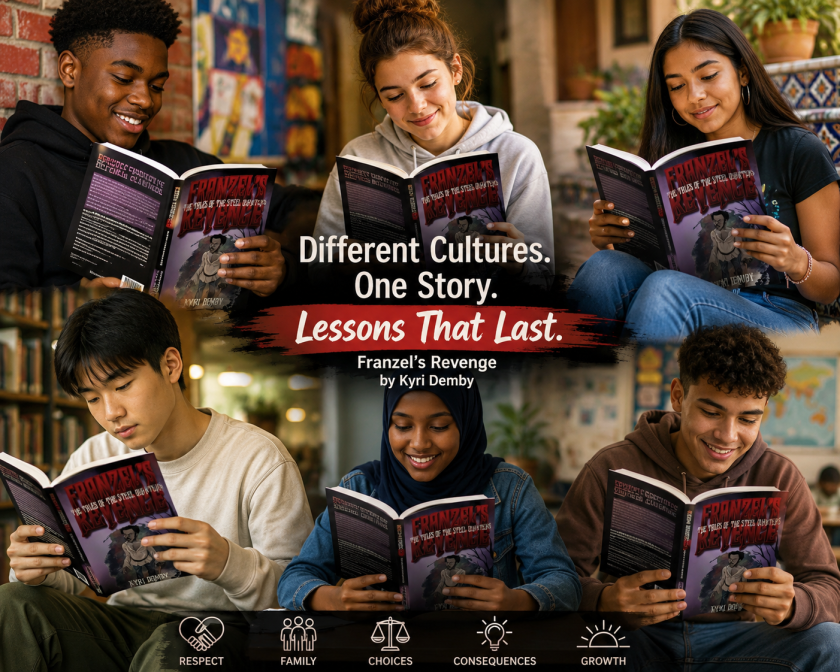
Summertime Reading for Teens: Books That Entertain, Teach, and Transform

Summer is one of the best times to encourage teens to read. Without the pressure of homework assignments and classroom deadlines, young people can explore stories that capture their imagination while also helping them grow as individuals. The best books do more than entertain—they speak life into readers, challenge them to think, and plant lessons that stay with them long after the final page is turned.

Many parents view reading as a way to keep children occupied during the summer months. While that’s certainly a benefit, great books accomplish something much deeper. Stories have a unique way of reaching the heart. As teens connect with characters, celebrate victories, and experience consequences through the eyes of fictional heroes and villains, they are quietly learning valuable lessons about choices, character, relationships, and responsibility.

The Hidden Power of Stories

When teenagers read, they aren’t just processing words on a page. They are absorbing ideas, values, and perspectives. Psychologists have long recognized that stories influence the subconscious mind. Through narrative, young readers learn empathy, develop critical thinking skills, and gain insight into how decisions impact their lives.

A powerful story can teach lessons that a lecture never could.

For example, a book about honesty may show the painful consequences of deception. A story about courage can inspire readers to stand up for what’s right. Books about friendship can demonstrate loyalty, forgiveness, and accountability. The lesson becomes part of the experience rather than a sermon.

That’s why parents should carefully consider what their children read. The right book can entertain while also reinforcing values that families want to cultivate.

Why Lesson-Based Fiction Matters

Today’s teens are surrounded by messages from social media, television, music, and peers. Books provide an opportunity to introduce positive influences that encourage growth and reflection.

Books that teach lessons can help young readers:

  • Understand the consequences of their choices.
  • Develop empathy for others.
  • Strengthen moral decision-making.
  • Learn responsibility and self-discipline.
  • Build confidence and resilience.
  • Appreciate family relationships.
  • Think critically about right and wrong.

The beauty of fiction is that readers can experience these lessons safely through the characters’ journeys.

A Summer Read with a Message: Franzel’s Revenge

One book that combines suspense, horror, adventure, and meaningful life lessons is Franzel’s Revenge: The Tales of the Steel Quarters by Kyri Demby.

The story follows two sisters, Aliyah and Amirah Bashara, who have developed a pattern of disobedience both at home and at school. Their behavior becomes so problematic that they are nearly suspended right before spring break.

Instead of imposing traditional punishment, their parents decide on a family retreat designed to strengthen relationships and help the girls reflect on their actions. Unhappy about the decision, Aliyah and Amirah run away to a nearby town as payback for being forced to attend the retreat.

While exploring the town, they discover a bookstore where the owner shares a chilling legend from a mysterious book. The story centers on Franzel, a slave who was falsely blamed for the disobedience of his master’s children. In a cruel attempt to force a confession, his master cut off his leg. Franzel died from his injuries, and legend says his spirit now seeks out disobedient children.

At first, the girls dismiss the story. But strange events begin to happen. Whenever they choose to disobey their parents, they sense Franzel’s presence drawing closer. Fear begins to change their behavior—until one fateful night when a friend convinces them to stay out late and ignore their parents once again.

What follows is a suspense-filled journey that keeps readers turning pages while encouraging them to think about the consequences of their choices.

Why Parents Will Appreciate This Book

Parents often struggle to find books that are both engaging and meaningful. Franzel’s Revenge offers an exciting horror story while opening the door for important conversations about:

  • Obedience and respect.
  • Family relationships.
  • Personal responsibility.
  • Peer pressure.
  • Consequences of poor decisions.
  • Character development.

The story doesn’t simply tell children to obey—it allows them to experience the emotional and practical consequences of disobedience through the eyes of relatable characters.

For parents looking for summer reading options that entertain while reinforcing positive values, this book offers a unique combination of thrills and life lessons.

Making Summer Reading Count

This summer, encourage your teen to read books that do more than fill time. Choose stories that challenge, inspire, and teach. Great books can become mentors, helping young readers develop wisdom, compassion, and strong character.

Whether your child enjoys adventure, mystery, fantasy, or horror, look for stories that leave them with something valuable after the excitement is over.

Because the best books don’t just occupy a teenager’s summer.

They help shape the person that teenager will become.

Featured Summer Read

Franzel’s Revenge: The Tales of the Steel Quarters
By Kyri Demby

A chilling supernatural tale about two sisters whose disobedience leads them into a terrifying encounter with an ancient legend. Perfect for middle-grade and teen readers who enjoy suspenseful stories with meaningful lessons about choices, consequences, and family.

This summer, give your teen a book that entertains their imagination while speaking to their heart. Franzel’s Revenge does both.

Franzel’s Revenge: The Tales of the Steel Quarters https://a.co/d/036K2PhT

Posted in Positive Flow

A Message on Open and Honest Discourse

Sending Love and Prayers to the family of Charlie Kirk

To my brothers and sisters who may feel anger or even hatred toward Charlie Kirk:

I want to start by saying your feelings are real and deserve respect. It’s not easy to listen to someone whose words have caused frustration, pain, or even anger. For many Black Americans, history itself has taught us to be cautious about voices that seem to dismiss or challenge our lived experience. That weight is real.

But here’s something important: shutting down dialogue closes doors that might lead to understanding, growth, and even change.

1. The Value of Listening — Even When It Hurts

Listening doesn’t mean agreeing. Listening means:

  • You choose to understand where someone else is coming from.
  • You develop the ability to respond thoughtfully instead of reacting out of frustration.
  • You demonstrate strength, not weakness — because it takes courage to face ideas that don’t affirm you.

When Dr. King debated segregationists, he didn’t do it because he loved what they said. He did it because he understood that open discourse is how you expose truth and challenge error.


2. The Strength of Our Tradition

Our history as Black people in America is filled with leaders who were never afraid of hard conversations. Frederick Douglass, Malcolm X, Fannie Lou Hamer — all engaged with opponents who dismissed or demeaned them. Why? Because truth has a way of shining brighter when it’s tested against falsehood.


3. Why Open Discourse Matters Today

  • If we only talk to people who agree with us, we never sharpen our perspective.
  • When we engage with those we disagree with, we not only learn about them — we also learn about ourselves.
  • Sometimes, surprising common ground emerges in areas we never expected.

4. Moving Beyond Hate

Hatred only eats away at the hater. If we carry resentment into every conversation, it blinds us to opportunities for influence and healing. Open discourse doesn’t erase pain, but it transforms it into power.


Closing Thought

It’s okay to say, “I don’t agree with Charlie Kirk, and I may never agree with him.” But it’s also okay — and even necessary — to talk with people who don’t think like you. That’s how bridges are built, that’s how stereotypes are broken, and that’s how we move forward as a people.

Open and honest discourse is not about Charlie Kirk. It’s about us — our strength, our growth, and our future.

Prayer for the Family of Charlie Kirk

Heavenly Father,

We come before You with heavy hearts, lifting up the family of Charlie Kirk in their time of grief. Lord, You are close to the brokenhearted and You save those who are crushed in spirit (Psalm 34:18). We ask that Your presence would surround his wife, children, parents, and all who loved him deeply.

Give them comfort in their sorrow, peace in their questions, and strength for the days ahead. May they find refuge under Your wings and assurance in Your promise that nothing can separate us from the love of Christ Jesus (Romans 8:38–39).

Father, we thank You for the ways Charlie’s life impacted many, and we ask that the seeds of truth, courage, and conviction he planted would continue to grow. We pray that his family would feel the love and support of community, and more importantly, the tender care of Your Spirit.

Turn their mourning into hope, and let their tears remind them of Your promise of eternal life through Christ. Hold them close, Lord, and carry them as they walk through this valley of loss.

In Jesus’ name we pray,
Amen.

Posted in Positive Flow

🚨🚨🚨🚨New Video for kids! 🚨🚨🚨🚨

Parents of Primary Students Use This Video

I normally make my kids sit down and repeat the singing, then on the “clap your hands” part I let them jump around the room while clapping. Then we run back and sit down to sing again! It’s so much fun!

Posted in Positive Flow

Affirmations 2

  1. I choose compassion over being right.
  2. I release the need to say “I told you so.”
  3. I wish well for others, regardless of their actions.
  4. I focus on positive solutions and growth.
  5. I cultivate empathy and understanding in my interactions.
Posted in Positive Flow

Affirmations

  1. I release the need to control others and trust their journey.
  2. I surrender my need to control God and embrace divine wisdom.
  3. I trust that everything is unfolding perfectly in its own time.
  4. I open my heart to understand God’s true nature.
  5. I find peace in letting go and trusting in a higher power.
Posted in Positive Flow

New Life Lens Affirmations

  1. I choose to see challenges as opportunities for growth.
  2. I release the need to be a victim and embrace my power.
  3. I trust my intuition and protect my energy from those who would take advantage.
  4. I am resilient, capable, and in control of my reactions.
  5. I cultivate a mindset of abundance and positive possibility.
Posted in Positive Flow

Navigating the Tricky Talk: Tips for Uncomfortable Conversations with Your Kids

You know that knot in your stomach? That slight hesitation when you realize a tough topic needs to be addressed? That’s the feeling most parents get when faced with an “uncomfortable conversation.” But leaning into that discomfort, rather than shying away from it, is where the real connection and growth happen.

Here are some practical tips to help you approach those vital discussions with confidence and care:

  1. Choose the Right Time and Place (and Don’t Force It):
    • Privacy is Key: Find a quiet moment when you won’t be interrupted. In the car, during a walk, or even just before bedtime can sometimes be less intimidating than a face-to-face sit-down.
    • No “Ambush” Talks: Don’t spring a heavy topic on them when they’re rushed, stressed, or engaged in something else. Look for a relaxed moment.
    • Read the Room: If your child is clearly not in the mood, it’s okay to say, “Hey, I wanted to talk about X, but if now’s not a good time, let’s find one later.”
  2. Start by Listening More Than Talking:
    • Open-Ended Questions: Instead of lecturing, start by asking what they know or what they’ve heard. “What do you know about…?” or “Have you heard anything about…?” can open the door.
    • Listen Without Interruption: Let them express themselves fully, even if they’re wrong or their ideas are concerning. Your first job is to understand their perspective.
    • Pay Attention to Non-Verbals: Are they fidgeting? Avoiding eye contact? These can tell you a lot about how they’re feeling.
  3. Be Honest and Direct (Age-Appropriate Honesty):
    • Don’t Beat Around the Bush: Kids are smart. They can sense when you’re uncomfortable or avoiding the truth. Use clear, simple language appropriate for their age.
    • No Fairy Tales: When talking about sex, death, or difficult social issues, avoid euphemisms that can confuse or frighten them.
    • Admit What You Don’t Know: It’s perfectly okay to say, “That’s a great question, and I don’t have all the answers. Let’s try to find out together.”
  4. Validate Their Feelings (Even if You Don’t Agree):
    • “It sounds like that made you feel really confused/scared/angry.”
    • “I can understand why you might think that.”
    • Validation isn’t agreement; it’s acknowledging their emotional experience, which makes them feel safe to share more.
  5. Share Your Values, Don’t Lecture (Reinforce Your Family’s Standard):
    • After listening, gently but clearly state your family’s beliefs and values. “We’ve talked about how some people do things differently, but in our family, we believe in X, Y, and Z. This is why we choose to live this way.”
    • Focus on “we” and “our family” to emphasize shared identity and standards within your home.
    • Explain the why behind your rules or values, rather than just stating them.
  6. Answer Their Questions Openly and Calmly:
    • When they ask questions, try to answer without judgment or panic.
    • If a question stumps you, it’s a perfect opportunity for a teaching moment about research or different perspectives. “That’s a really complex question. Let’s think about it/look it up together.”
  7. Remember: It’s an Ongoing Dialogue, Not a One-Time Fix:
    • Uncomfortable conversations are rarely resolved in one sitting. They’re often threads you’ll pick up again and again as your child grows and encounters new information.
    • Revisit topics as they mature and their understanding evolves.
  8. Model Good Communication:
    • Show them what it looks like to approach difficult topics with respect, curiosity, and empathy.
    • If you make a mistake, apologize. “I realized I got a little defensive there, and I’m sorry. Let’s try that again.”
  9. Manage Your Own Emotions:
    • It’s natural to feel anxious, angry, or sad about certain topics. Try to regulate your own emotions before and during the conversation so you can remain a calm, steady presence for your child. Take a deep breath.

By embracing these uncomfortable conversations, you’re not just protecting your child; you’re building a foundation of trust, resilience, and open communication that will serve them well throughout their lives. Good luck – you’ve got this!

Posted in Positive Flow

Beyond the Ban: Why Uncomfortable Conversations, Not Book Bans, Are Your Kids’ Best Shield

In today’s rapidly evolving world, it’s natural for parents to feel a fierce need to protect their children. We want to shield them from anything that might cause them harm, confusion, or expose them to ideas we don’t agree with. This protective instinct often manifests in efforts to control what our children are exposed to, whether it’s monitoring media, carefully selecting friends, or, increasingly, advocating for the removal of certain books from school libraries.

However, while the impulse to ban books might stem from a good place, it’s a strategy that ultimately misses the mark and, in fact, can leave our children less prepared for the realities they will inevitably face.

Consider this: We pour energy into debating and removing books, yet often overlook the vast, unfiltered, and often unregulated world of social media that our children navigate daily. If our goal is to truly protect our kids and guide their understanding of the world, then the real work lies not in banning information, but in empowering them with the tools to critically engage with it.

The truth is, you cannot ban every challenging idea, every differing viewpoint, or every uncomfortable truth. The world outside your home is diverse, complex, and sometimes messy. And frankly, the more you try to block out these realities, the more intriguing and powerful they can become to a curious mind.

So, what’s the real shield? It’s you. It’s your voice, your values, and your willingness to have the uncomfortable conversations.

Instead of hoping your children never encounter certain topics, embrace the opportunity to be their primary source of information and guidance. This means:

  • Don’t shy away from difficult topics. Whether it’s sex education, diverse family structures, different belief systems, or social injustices, your children are going to hear about these things. Wouldn’t you rather them hear it from you, with your guidance and your perspective, than from an unregulated online source or a misinformed peer?
  • Clearly articulate your family’s values and beliefs. Let your children know what you believe in, what your family stands for, and what expectations you have within your home. This isn’t about imposing a rigid dogma, but about providing a strong foundation. “In our house, we believe in X, Y, and Z. This is how we treat others, and these are the standards we uphold.”
  • Acknowledge that other ways of living exist. You can say, “You might hear stories or see things that show people living in different ways than we do. That’s okay. People have different paths and beliefs. But in our house, this is our standard, and these are the values we live by.” This validates their observations while reinforcing your family’s unique identity.
  • Foster an environment of open communication. Make it clear that your children can come to you with any question, no matter how awkward or sensitive. Let them know that you are a safe space for their curiosity and concerns, and that you will always strive to answer them honestly and thoughtfully.
  • Equip them with critical thinking skills. Teach them how to evaluate information, consider different perspectives, and discern reliable sources. This is a far more powerful and lasting protection than any ban could ever offer.

Banning books might temporarily remove a specific narrative, but it does little to prepare your child for the vast ocean of information and differing viewpoints they will encounter as they grow. True protection comes from equipping them with the knowledge, values, and critical thinking skills to navigate that ocean, with you as their steady compass.

So, let’s put less energy into policing bookshelves and more into opening up courageous conversations. Your willingness to engage, to explain, and to guide will be the most powerful shield you can ever give your child.

Posted in Positive Flow

Building a Moral Compass: Why Our Actions Speak Louder Than Our Words

We all want our children to grow into kind, honest, and responsible adults. We tell them about the importance of telling the truth, being fair, and following the rules. We strive to instill in them a strong moral center, a compass that guides them toward good choices even when we’re not around. But sometimes, in the hustle and bustle of daily life, we might inadvertently chip away at the very foundation we’re trying to build.

Our children are always watching. They are sponges, absorbing not just our words, but more importantly, our actions. They are learning about right and wrong, not just from our lectures, but from how we navigate the world ourselves.

Consider these everyday scenarios:

  • “Tell them I’m not home.” When we ask our children to lie on our behalf, even about something seemingly small, we send a confusing message. We’re essentially telling them that honesty is conditional, and that sometimes, it’s okay to bend the truth for convenience. This undermines the very concept of integrity we wish them to embrace.
  • “Just say you’re five instead of six for the free meal.” This might seem like a harmless way to save a few dollars, but to a child, it teaches that deception is acceptable if there’s a personal gain. It blurs the lines between honesty and dishonesty and can lead to a sense that rules are meant to be circumvented rather than respected.
  • “Just cross here, it’s quicker than the crosswalk.” While seemingly innocuous, this teaches disregard for safety rules and community norms. It suggests that personal convenience outweighs established guidelines for public safety. More broadly, it can instill a subtle disrespect for authority and a tendency to prioritize shortcuts over responsible behavior.

The famous musical “Into the Woods” features a poignant song with the repeated lyric, “Careful the things you say, children will listen.” This isn’t just about spoken words; it extends to every unspoken lesson we impart through our behavior. Our children are listening, watching, and internalizing.

So, how can we truly build that strong moral center?

It starts with us. It requires conscious effort and a commitment to embodying the values we want our children to hold.

  • Be a role model of honesty: Let your “yes” be yes and your “no” be no. If you make a mistake, admit it. Show them that honesty, even when difficult, is always the best policy.
  • Demonstrate integrity: Follow the rules, even when no one is watching. Pay your fair share, respect public spaces, and show integrity in all your dealings.
  • Prioritize safety and respect for rules: Explain why crosswalks and other safety rules are important. Show them that rules are there to protect us and create an orderly society.
  • Talk about choices: When situations arise, discuss the ethical implications of different choices. Ask them, “What do you think is the right thing to do here and why?”
  • Apologize when you falter: We’re all human, and we will make mistakes. When you do, apologize to your children. This models humility and teaches them that it’s okay to acknowledge and learn from errors.

Building a moral center in our children isn’t about perfection; it’s about consistency and intentionality. It’s about recognizing that every action we take, every choice we make, is a lesson being taught. Let’s be mindful of the lessons we’re imparting and ensure that our actions are consistently reinforcing the values we want our children to carry with them throughout their lives. Because when it comes to character, our children are indeed watching, and they are listening.

Posted in Positive Flow

My Black Fatigue: A Plea for Peace Within

Lately, a particular kind of weariness has settled deep in my bones. It’s not just the fatigue of navigating a world that often misunderstands or undervalues Black lives; it’s a specific kind of exhaustion that hits closer to home. It’s a fatigue born from seeing something that breaks my heart repeatedly: videos of Black people fighting each other, killing each other, and harming our own.
Every time another clip surfaces, another news report details a tragic loss, another senseless act of violence within our communities, a wave of despair washes over me. It’s a profound sadness, a raw frustration that screams, “Enough!” We are battling so much from the outside – systemic injustices, racial prejudice, the constant pressure to prove our worth. To then turn around and see us turn that pain and anger inward… it’s a burden almost too heavy to bear.
This isn’t about pointing fingers or shaming. It’s about acknowledging a deep wound that needs healing. It’s about the truth that while external forces absolutely contribute to our struggles, we also have a responsibility to ourselves and to each other.
One of the most critical lessons we need to collectively embrace is the power of emotional control. We are human, and emotions run high. We experience anger, frustration, jealousy, and fear, just like anyone else. But for Black people, the stakes of unchecked emotions can feel devastatingly high. When conflicts arise, when disagreements fester, when pride takes over, are we reaching for understanding, or are we reaching for destruction?
The reality is, we often carry immense trauma – historical, intergenerational, and current. We live with the weight of expectations, the sting of discrimination, and the constant fight for dignity. It’s understandable that sometimes, that pressure can manifest in unhealthy ways. But understanding it doesn’t excuse it. We owe it to ourselves, to our ancestors, and to future generations to break this cycle. (Stop, Think, and Breathe and Make the Right Choice)
We need to learn to pause.
We need to learn to listen.
We need to learn to de-escalate.
We need to learn to forgive.
This isn’t easy work. It requires introspection, community dialogue, and a commitment to new ways of being. It means teaching our children, and ourselves, how to resolve conflict without violence, how to express frustration without resorting to harm, and how to value every single Black life as precious.
My Black fatigue comes from seeing us hurting ourselves. But my hope comes from believing in our collective power to heal. Let’s channel that frustration into constructive action. Let’s transform our pain into purpose. Let’s learn to master our emotions, not be mastered by them. Only then can we truly build the strong, peaceful, and thriving communities we all deserve.
What are your thoughts? How can we, as a community, foster greater emotional intelligence and internal peace?